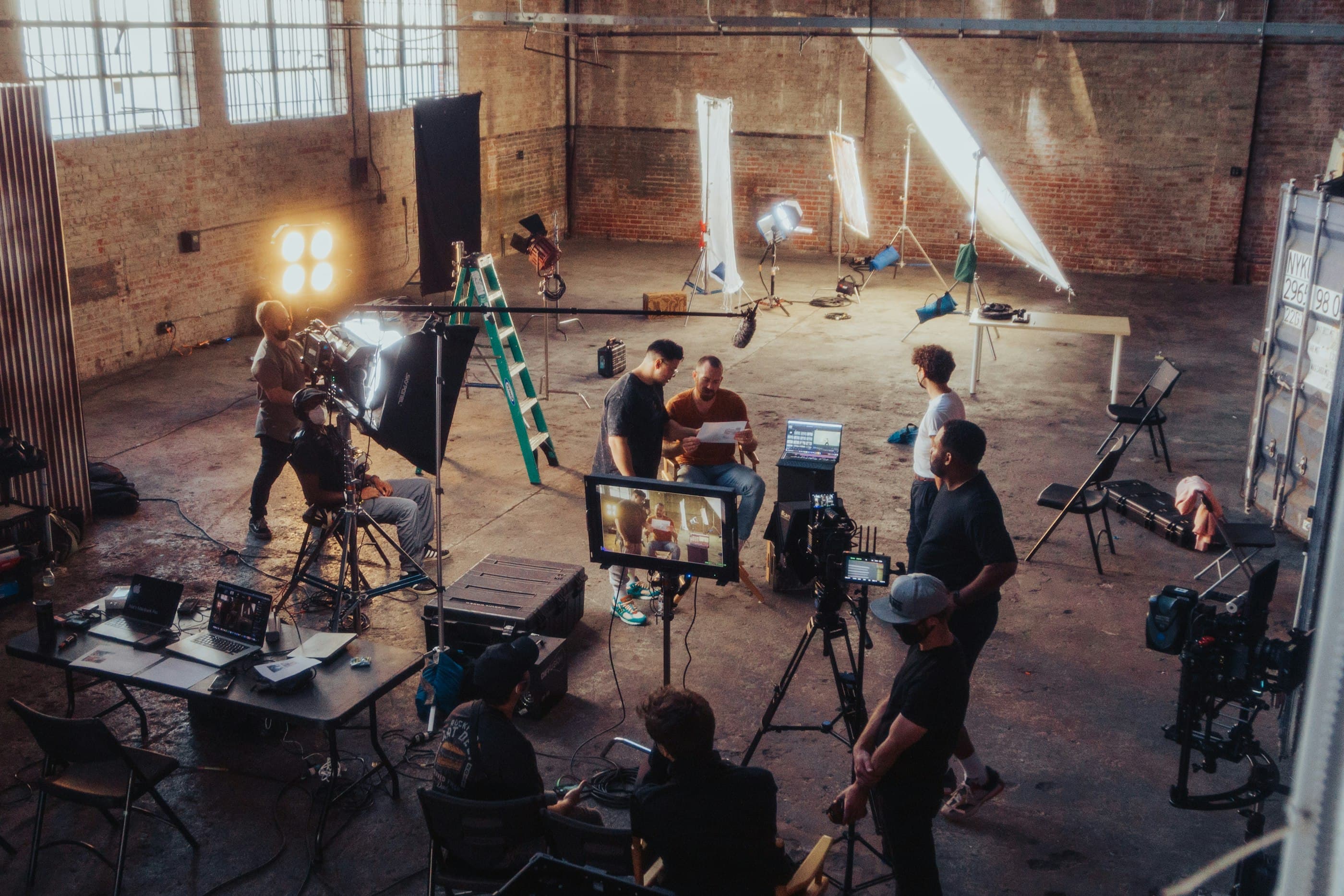
AI transformation for media, entertainment and localization companies
Media
Native puts AI agents into localization, content operations, rights and finance at media companies, inside the systems they already run.
Where AI has an impact in media and entertainment
Subtitle and caption QC
Every file checked for timing, reading speed and delivery spec before a person reviews the exceptions.
Transcription and script prep
Transcripts and spotting lists drafted for linguists to correct, not type from scratch.
Translation first passes
Drafts that apply the series glossary and character names, for translators to adapt.
Metadata and artwork
Titles, synopses and tags produced for each platform's format and language.
- Rights and availability
- Vendor invoices
- Royalty and residual inputs
- Content discovery
Native helps media, entertainment and localization companies put AI agents into the operations behind the content: localization workflows, metadata, rights and the finance work that scales with every title. At Iyuno, a global localization and dubbing company, Native built an engine that reads its invoices at 99.9% field-level accuracy. The first agent is typically in production within weeks.

Case study · Iyuno
Iyuno cut invoice processing from days to minutes.
Native helped Iyuno build an extraction engine that reads the invoices reaching its finance team, whatever the format, at 99.9% field-level accuracy. It gave the team back over 250 hours.
Frequently asked questions
How is AI used in media and entertainment?
In the creative tools, for speech recognition, translation and synthetic voice, and increasingly in operations: subtitle QC, metadata, rights questions, vendor invoices and delivery packages. The operations side is where most companies still have the largest manual workload.
Can AI do dubbing and localization?
AI can draft transcripts, translations and subtitle timing, and check files against delivery specs, which removes most of the mechanical work. Adaptation, performance and final sign-off stay with linguists and directors, and any synthetic voice needs the performer's consent.
What does an AI transformation partner do for a media company?
An AI transformation partner maps how titles, files and invoices move through the business, finds the steps that are manual and repetitive, and builds agents that do that work inside your existing systems. Native's forward-deployed engineers build the agents and stay until they run in production.
Is it legal to use AI voice cloning for dubbing?
It depends on the performer's contract, the applicable union agreement and local law. Agreements such as SAG-AFTRA's require consent and compensation for digital replicas, so any workflow that uses a synthetic voice has to check those terms first.
Where should a localization company start with AI?
Usually with a high-volume step that follows clear rules, such as subtitle QC or invoice processing. Both show their impact within weeks and do not touch the creative work.